What are ITTOs?

Published: Sun, 04/15/12


PMP Exam Videos    |   PMP Exam FlashCards    |   PMP Exam Formulas


In this issue...

Cornelius Fichtner, PMPHello ,

This week, we are featuring our article "Should you learn ITTOs by Heart?".
 
In this article I discuss if you should, or should not memorize the PMBOK® Guide's ITTOs (Inputs, Tools, Techniques and Outputs)?

Other helpful information on this week's issue include:

  • The April 2012 discount coupon on The PM Formulas.
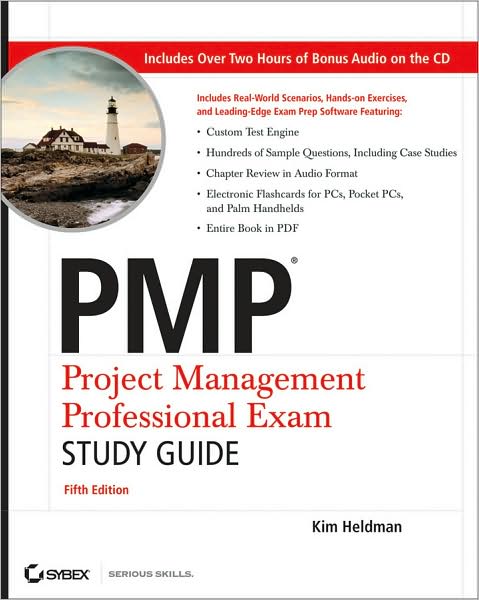
  • Our recommended study material: PMP: Project Management Professional Exam Study Guide
  • The Short Guide to Becoming a PMP featured video of the week
  • PMP Exam Sample Question and Answer.
  • PMP Exam Tip: What is the difference between Quality Assurance and Quality Control?

Read on and Enjoy!

Until Next Time,
Cornelius Fichtner, PMP

President, OSP International LLC

April 2012 Discount Coupon

For our next amazing deal and offer, we bring you a $9.97 discount coupon for The PM Formulas  Instead of paying the regular price of $29.97, you can get The PM Formulas for just $20.00. This offer is good from April 1-30, 2012 only. Details are as follows:

Product: The PM Formulas
Regular price: $29.97
Discount: $9.97
Price after discount: $20.00
Coupon validity: April 1-30, 2012
Coupon code: Apr12

Redeeming this great deal is easy!
 
First watch this video here http://www.youtube.com/watch?v=8tG81gp6AuQ to learn how to use the coupon and then go to our website at http://www.pmformulas.com/ where you begin by clicking on "Order" at the top. (Please note that our coupons are only available for new purchases and cannot be applied as a refund if you purchased earlier.)
 
Sign up for our free newsletter to get the latest coupon codes, amazing deals and promos for our featured products each month!  Our coupon codes can also be found on our websites so look out for them and don't let the opportunity pass you by. 

Order now as this is only a one time limited offer that you cannot get anywhere else!

Recommended Study Material: PMP: Project Management Professional Exam Study Guide

Written by project management expert Kim Heldman, PMP: Project Management Professional Exam Study Guide (Disclosure: Compensated Affiliate) is an excellent book that will guide project managers on their way to the PMP Exam. It provides comprehensive coverage of the exam objectives, essential PMP topics, concepts, and key terms.

Your benefits are:

  • Prepare you to take the PMP Exam and the CAPM Exam both offered by PMI. It covers all essential procedures and concepts from PMBOK Guide, 4th Edition.

  • Uses real-world scenarios and How This Applies to Your Current Project sidebars to fully illustrate concepts.

  • Includes CD with testing software, practice exams, electronic flashcards, and over two hours of audio review.

  • Serves as a valuable go-to book to keep on hand -- even after the exam.

Project managers who took the exam noted how  PMP: Project Management Professional Exam Study Guide is exceptional in teaching useful information that consistently appeared on the test.

For more information and customer reviews, click here!

Full Disclosure: PMP: Project Management Professional Exam Study Guide is an affiliate product. If you click and choose to purchase the book, we will earn a commission.

Should you learn ITTOs by Heart?

Do you feel that in order to pass the Project Management Professional (PMP) ® exam you should memorize the PMBOK® Guide's ITTOs (Inputs, Tools, Techniques and Outputs)? Do you think that the PMP exam is full of IITO type of questions? Many people still believe this myth. Well, let me clear some misconceptions...

Many project managers have successfully passed the PMP exam without any memorization. The current PMP exam is all about an in-depth understanding of applying project management concepts and principles from the PMBOK® Guide as well as general management knowledge from other sources to project situations.

Granted, ITTOs are a major part of the PMBOK® Guide and about 75% of material for the PMP Exam is taken from the PMBOK® Guide. So it's understandable that we assume because there are hundreds of ITTOs in the Guide the exam must be full of knowledge-based questions about them. And sample questions like "Which of the following is not an Input of the Create WBS process?" are plentiful on the internet.

So should you, or should you not memorize them?

Here is my story: When I studied for my PMP exam I knew them by heart. I could tell you exactly which ITTO is used in which process. But I took my exam years ago. Since then the PMP exam has become more experience-based using situational questions over knowledge-based questions.

Therefore a change in approach is needed.

It is still important to have a general understanding about which ITTO is used in which process, but you do not need to be able to recite them by heart. It is much more important to understand the concept of "Why is this ITTO used in this process?" Your knowledge about WHY an ITTO is used in a process will definitely help you to arrive at the right answer.

Additionally, this new approach is much more helpful for you as a project manager in the long run. Frankly speaking, who cares whether an ITTO is part of a particular process or not after you have passed the PMP exam? If you need to know, you can just look it up! But knowing what they are, why you need them and how to apply them successfully on your projects greatly enhances your project management skills. It goes a long way in making you an exceptional project manager.

As you are studying the ITTOs for your PMP Exam, keep the following concepts in mind:

First of all, Inputs and Outputs are always "things", like a project management plan, a measurement, a result, an update to a plan, a document or a deliverable. You can touch Inputs and Outputs.

Second, it is very common that an Output from one process becomes an Input to another process. Focus your studies on understanding how these items flow through the many processes in the PMBOK® Guide in order to produce our project deliverables. Use the many charts that the Guide provides to see this graphically.

Third, Tools & Techniques very often have some form of "action" attached to them, like a meeting, a methodology, a technique, a form that you must fill in, or a matrix that you create.

And lastly, don't forget to read the complete PMBOK® Guide glossary. Study and understand the definitions of the roughly 350 terms that you find here. Again, you are not doing this for memorization sake, but instead you want to learn "the language" of the PMP exam. Often we use project management terms loosely and interchangeably in our day to day work. But for the exam we have to know exactly what each term means.

Reading the glossary ensures that you know the correct definitions, and, as a bonus, the glossary indicates for each term if it is an input/output, tool or technique.

So move beyond a third-graders approach of fact memorization. Instead, study the big picture, the data flows and how the ITTOs are the glue between the processes.

The Short Guide to Becoming a PMP

Are you planning to take the PMP Exam but don't know where to begin Then begin with The Short Guide to Becoming a PMP, which is your Free PMP Exam Guide. Written by Cornelius Fichtner, PMP, the guide takes you through eight essential steps of preparing for the PMP Exam:

1. Assess Your Eligibility; 

2. Fill out the Application;

3. Build a PMP Exam Study Plan;

4. Get Essential Study Materials;

5. Learn Study Tips & Techniques;

6. Use Sample Questions & Tests;

7. Get Exam Day Ready;

8. Get Recertified.

You will learn everything you need to know on how to prepare for the PMP Exam. In every step you will receive valuable tips, tricks and resources.
 

Sample PMP Exam Question

Tim is the project manager working on an electronic manufacturing project. In his project he wants to establish a warranty for some of the precision parts he is buying. What risk response strategy is he using?

A.) Mitigate
B.) Avoid
C.) Accept
D.) Transfer

Hint: Tim is shifting the negative impact of the risk.

All our questions are updated to the latest PMBOK Guide standard. Stop by at http://free.pm-exam-simulator.com and try the PMP Exam Simulator free for 3 days.

We also offer 110 free questions at http://www.free-pm-exam-questions.com. We are a PMI Registered Education Provider.

Exam Tip:What is the difference between Quality Assurance and Quality Control?

Many people have trouble understanding the difference between Quality Assurance (QA) and Quality Control (QC) as they are preparing for their PMP Exam. That is not surprising. The terms are very closely related and if you don't work in the field, the difference doesn't seem too obvious.

Let's first look at the PMBOK Guide definition for each:

Perform Quality Assurance: The process of auditing the quality requirements and the results from quality control measurements to ensure appropriate quality standards and operational definitions are used.

Perform Quality Control: The process of monitoring and recording results of executing the quality activities to assess performance and recommend necessary changes.

As always, the PMBOK Guide is a bit dry in it's definitions, but before we "translate" these definitions into everyday words, it is a good idea to remind ourselves first of two other quality concepts. They are "Prevention over inspection" and "DIRFT - Do It Right the First Time". At the heart of these two concepts lies the idea that everything we produce should be produced error free from the start, because it's more costly to fix an error afterwards.

So... how can we assure that our deliverables are produced error free? Simple: We have to put appropriate processes in place; processes that are aimed at helping us produce these deliverables without errors every time. But because there will always be some deviation from even the best processes, we also have to put some controls in place, which measure the results after the fact, so that we can make adjustments if necessary.

Quality Assurance are therefore the processes that are aimed at preventing any defects and Quality Control are the measurements we have in place to detect and repair any remaining defects.

So let's assume that you are manufacturing the iPhone.  In QA you put all the processes in place to ensure that each iPhone is manufactured defect free. This would include the types of manufacturing equipment used, training people and documenting all production processes. QC comes into play after the fact by testing the finished product. For instance you do a sample testing to see if a randomly picked iPhone from your production line passes or fails the standards.

Answer

The correct answer is D.

Explanation: Risk transfer requires shifting some or all of the negative impact of a threat, along with the ownership of the response. Taking out insurance or a warranty transfers the risk from the owner to the other party.

Reference: PMBOK4 - pg:303

Lessons Learned from Regis Piccand, PMP
Happy to be a PMP !!

I took me about 3 months to be ready. I have read the Head First PMP and the PMBok in parallel, chapter by chapter. I didn't bother memorizing anything specific at that point, just get a feel for the material that needed be covered. Then I used the PM Formula guide to learn specifically about the formulas. Reading the books and studying the formulas took me about two months in total. Then, I focused on memorizing the processes, and some of the ITTOs. I have used the pm exam simulator to find out how good/bad I was, and scored about 65% on the first exam. By analyzing my mistakes and the test reports, I then focused on the areas that needed most work, and went on like this during about three weeks. The exam simulator really helped me monitor my progress and know when I would be ready for the test. Regarding the formulas, I have also used the BrainBok formula challenge, which contains about 50 tough formula questions - that really prepared me for the worst questions !

The actual PMP exam questions are really close to what the pm exam simulator had prepared me for, so I was quite comfortable taking the exam. Also, the pm exam simulator helped me a lot with managing my time during the exam.

One piece of advice: using the PM Exam Simulator, I was usually able to finish the 200 questions in about 3h20 to 3h30. However, because of the test environment and stress related to taking the PMP, it took me 3h50 to get done with the real exam (counting a 5 minutes break). So, make sure you account for some extra time.

Wishing you good luck !

Regis Piccand, PMP

How about you? Did you recently pass the PMP exam? Care to share your experience?

Simply click the "new thread" button here: http://bit.ly/9clxBE to let us know.


Our PMP Prep Courses
PMP Exam Prep for your iPod / Android
The PM PrepCast

49 PMP Formulas
PMP Exam Formulas

1,750 Flash Cards
PM FlashCards

PMP Exam Coaching
The PM StudyCoach

Recommend Us..
Twitter
Follow @PMExamTips

Facebook PMP Tips
Like Us.

Thanks for reading!If you know someone who could benefit from this, feel free to forward it to them!

Not a subscriber yet? Like what you've read?
Sign up here to get future issues delivered straight to you.
PMP Worksheets
Experience Verification Worksheet...

Contact Hours Worksheet...
PMP Exam Basics
Exam Rules
PMP Handbook (pdf)
CAPM Handbook (pdf)
PgMP Handbook (pdf)

For PMPs Only
After you pass your Exam...

Learn how to easily earn PDUs:

The PDU Insider...

Get PDUs on your iPhone / Android:
The PDU Podcast...

Earn Free PDUs:

The PM Podcast...
Republication
Please contact us if you would like to republish an article from this newsletter...
Contact Us

PMI, PMP, CAPM and PMBOK Guide are trademarks of the Project Management Institute, Inc.
PMI has not endorsed and did not participate in the development of our products.
OSP International LLC has been reviewed and approved as a provider of project management training by the Project Management Institute (PMI).
As a PMI Registered Education Provider (R.E.P.), OSP International LLC has agreed to abide by PMI established quality assurance criteria.
Copyright (c) 2011 OSP International LLC. All Rights Reserved.