What You Need to Know About the PMI and PMP?

Published: Sun, 04/01/12


PMP Exam Videos    |   PMP Exam FlashCards    |   PMP Exam Formulas


In this issue...

Cornelius Fichtner, PMPHello ,

This week, we are featuring a Podcast in which I was recently interviewed  on the Construction Industry Podcast and asked to introduce PMI and the PMP exam to construction professionals.

Other helpful information on this week's issue include:

  • The April 2012 discount coupon on The PM Formulas.

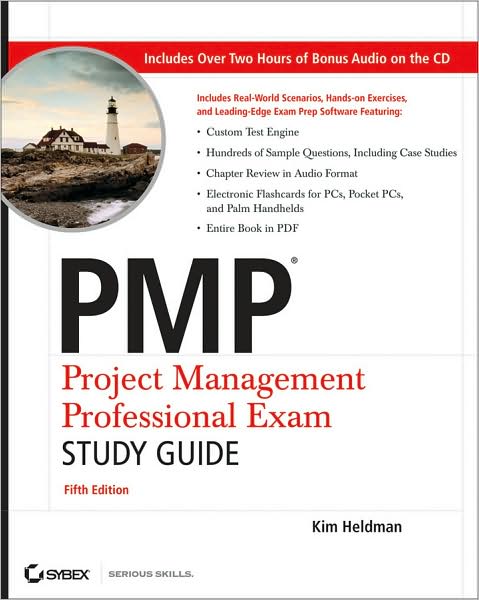
  • Our recommended study material: PMP: Project Management Professional Exam Study Guide

  • Three Ways To Prepare For Your PMP Exam as our featured video of the week.

  • The 4 Secret Ingredients to Passing the PMP Exam
  • PMP exam sample question and answer.

  • PMP exam tip: Read and Practice more...


Read on and Enjoy!

Until Next Time,
Cornelius Fichtner, PMP

President, OSP International LLC

April 2012 Discount Coupon

For our next amazing deal and offer, we bring you a $9.97 discount coupon for The PM Formulas  Instead of paying the regular price of $29.97, you can get The PM Formulas for just $20.00. This offer is good from April 1-30, 2012 only. Details are as follows:

Product: The PM Formulas
Regular price: $29.97
Discount: $9.97
Price after discount: $20.00
Coupon validity: April 1-30, 2012
Coupon code: Apr12

Redeeming this great deal is easy! 

First watch this video here http://www.youtube.com/watch?v=8tG81gp6AuQ to learn how to use the coupon and then go to our website at http://www.pmformulas.com/ where you begin by clicking on "Order" at the top. (Please note that our coupons are only available for new purchases and cannot be applied as a refund if you purchased earlier.)

Sign up for our free newsletter to get the latest coupon codes, amazing deals and promos for our featured products each month!  Our coupon codes can also be found on our websites so look out for them and don't let the opportunity pass you by. 

Order now as this is only a one time limited offer that you cannot get anywhere else!

Recommended Study Material: PMP: Project Management Professional Exam Study Guide

Written by project management expert Kim Heldman, PMP: Project Management Professional Exam Study Guide (Disclosure: Compensated Affiliate) is an excellent book that will guide project managers on their way to the PMP Exam. It provides comprehensive coverage of the exam objectives, essential PMP topics, concepts, and key terms.

Your benefits are:

  • Prepare you to take the PMP Exam and the CAPM Exam both offered by PMI. It covers all essential procedures and concepts from PMBOK Guide, 4th Edition.

  • Uses real-world scenarios and How This Applies to Your Current Project sidebars to fully illustrate concepts.

  • Includes CD with testing software, practice exams, electronic flashcards, and over two hours of audio review.

  • Serves as a valuable go-to book to keep on hand -- even after the exam.

Project managers who took the exam noted how  PMP: Project Management Professional Exam Study Guide is exceptional in teaching useful information that consistently appeared on the test.

For more information and customer reviews, click here!

Full Disclosure: PMP: Project Management Professional Exam Study Guide is an affiliate product. If you click and choose to purchase the book, we will earn a commission.

Understanding PMI and PMP - with Cornelius Fichtner, PMP by Cesar Abeid

Cornelius Fichtner, PMP was recently interviewed on the Construction Industry Podcast and asked to introduce PMI and the PMP exam to construction professionals. Cesar Abeid, the host of the show is himself PMP certified and one of Cornelius' students. They discuss the following topics:

  • What is the PMI?

  • What are the benefits of PMI membership?

  • What are the PMI certifications?

  • What are the benefits of the PMP certification?

  • How has the PMP certification helped you?

  • What does it take to get certified?

  • What is the best way of preparing for the exam?

  • What are some tips to select the correct answer on pmp questions?

If you are new to the PMI and PMP then this interview will give you a good head start. Please go to http://www.remontech.com/the-project-management-institute-construction-industry/ to hear it for free. The interview itself begins at the 14 minute mark.

The 4 Secret Ingredients to Passing the PMP Exam

The Project Management Professional (PMP) exam is developed and administered by the Project Management Institute (PMI) to measure and assess an individual's ability to apply project management skills in six different domains. Initiation, planning, execution, monitoring and controlling, closing the project, as well as professional and social responsibility are evaluated. Don't be intimidated! While the material may seem overwhelming, there are a few important factors to consider when preparing to successfully earn your PMP certificate. Experience, unde rstanding of project management principles, developing a solid study plan and reliably sticking to it, as well as practicing exam-taking strategies are essential ingredients for PMP exam success.

Secret Ingredient #1: Project Management Experience

Perhaps one of the most solid foundations for successful completion of the PMP exam is actual project management experience. Learning on-the-job with specific situations that develop a wide array of project management skills is an excellent way to retain information and far superior to rote memorization or passive reading. PMP test takers with project management experience are able to draw upon a database of information that is relevant and often easier to retrieve due to its personal nature. Recalling the small details of that last-minute project at work that your supervisor needed yesterday makes all of those grueling hours a worthwhile investment.

Before applying to take the PMP exam, PMI certification requires at least 4500 hours of experience in project management and 35 hours of documented training. This ensures that test-takers have the required skills to be successful and maintains the credibility of the certification.

Secret Ingredient #2: Understanding of Project Management Principles

Specific principles addressed in the PMP exam include communication, cost management, human resources, integration, procurement, quality, risk, scope, and time management. Each of these topics is covered in A Guide to the Project Management Body of Knowledge (PMBOK® Guide). You must understand them individually and how they work together to ensure overall successful project management. It is essential to use the most current version of the PMBOK® Guide for studying and review.

Secret Ingredient #3: Having a solid plan to study for the exam & sticking to it

As with all standardized examinations, the PMP covers a wide variety of material in a relatively short period of time. Don't be discouraged! Remember that careful planning and structure are essential to your exam success. It is important to develop a PMP Exam Study Plan to reduce the amount of intimidating material into manageable portions. People often find they work well with a structured exam preparation course that provides focused instruction over a specific timeline. One of the requirements of the PMP examination (35 hours of project management instruction) can be met with an online or in-person class. If you select an online course, ensure the class provides an "end of course assessment" and gives you written certification of participation and completion of required instruction hours.

The number ant type of questions on the exam are: initiating the project (11%), planning the project (23%), executing the project (27%), monitoring and controlling the project (21%), closing the project (9%), and professional and social responsibility (9%). Many people often divide up their study time in a similar manner, giving more hours to those topics that are tested more heavily. Others take practice exams and note specific weak areas in their knowledge, choosing to focus more review time on those topics. Your plan of attack will be personal and best suited to your own strengths, weaknesses, and timeline.

Most resources recommend spending one to two hours each day for four to eight weeks in preparation. Some people will require more time and others will require less. Work out a schedule with a manageable amount of material to cover each day. Be realistic in how much can be covered in one to two hours so that the schedule can be followed closely and certain areas don't slip, get skipped, or left out completely. Remember that most of us can't afford to neglect our day job during this study period and still have external commitments and responsibilities. Set weekly goals and regularly take practice exams to chart your progress. It's also very important not to forget to take refreshing breaks to do something you enjoy.

Secret Ingredient #4: PMP Exam-Taking Strategy

The PMP exam is made up of 200 multiple choice questions conducted on a computer at a Prometric testing center during normal business hours from Monday to Saturday. Test-takers are given a 15-minute tutorial and four hours to complete the exam. 25 pre-test questions remain ungraded, as they are used for future exam purposes. Inside the examination center, test takers are provided with rough sheets of paper and pencils. If needed, there are a variety of translation materials available upon request as the exam is only administered in English.

Mock questions and simulation exams are available from a variety of test preparation websites. Practice exams help future test-takers become familiar with the style and format of questions and enhance the endurance required for four-hour exams. It is commonly recommended that consistently scoring above 80% on mock exams is a strong indicator of success on the real thing. Gauge your progress on a weekly basis and determine how comfortable you feel with each topic area. Arriving on exam day with confidence means half the battle is already won.

Specific tips for test day strategies include sleeping well the night before, eating a healthy breakfast, wearing comfortable clothing, and arriving early. Before beginning the exam, many test-takers like to utilize the provided rough sheet to write out things like formulae, lists of processes with their inputs and outputs, as well as tools and techniques that will be useful throughout the exam. Consider taking two breaks spaced evenly throughout the exam. Don't waste too much time on a single question; mark it for review and move on.

Applying these four simple steps thoroughly and intelligently will ensure that the valuable time and money spent on the PMP exam is not wasted. Successful completion of the PMP depends on a test-takers ability to put their project management experience to work, to understand and apply project management principle, to thoroughly prepare with a solid study plan, and to bring everything smoothly together on a stressful exam day. Preparation is the key to reducing stress and guaranteeing success.

Three Ways To Prepare For Your PMP Exam

Remember that once you have set the career goal of taking the Project Management Professional (PMP) exam you have to decide on your study approach. 

Your choice will depend on how much self-motivation you have, the schedule you set and (of course) your budget.

This video explores the three options that lie before you.

Watch this video to learn more: http://bit.ly/HxR6Aw

Sample PMP Exam Question

During which phase of the project would you suggest the integrated change control process?

A) Throughout the project
B) Initiation
C) Closure
D) Intermediate

All our questions are updated to the latest PMBOK Guide standard. Stop by at http://free.pm-exam-simulator.com and try the PMP Exam Simulator free for 3 days.

We also offer 110 free questions at http://www.free-pm-exam-questions.com. We are a PMI Registered Education Provider.

Exam Tip: Manage The Time During Your PMP Exam

One important recommendation I have for those taking the PMP Exam is that to manage the time allotted to answer each question on the exam. Call it budgeting, call it time management, call it whatever you want; but do it! You need to walk into the examination room with a clear plan on how many questions you will answer per hour, when you plan on taking a break, and what you will do if time seems to be running out.

Remember that the exam is composed of 200 questions that you must answer within 4 hours. That's 1.2 minutes per question. Once you begin, the clock starts and will not stop even when you take a break. So plan your approach - say for the first 2 hours, answer all easy questions first and mark those difficult ones for later. Be sure to read all the questions carefully and understand them before you answer. Then take a 10 minute break before going back to the harder questions for the rest of the allotted time. By doing this you will be able to finish the whole exam on time.

But that's just one of many possible approaches and you should define your own. And by having a plan and implementing it you will relieve a lot of the exam pressure. So plan well, and budget your time wisely to succeed.

Answer

The Correct Answer is A.

PMP Exam Lessons Learned by Midi Park

Midi Park, PMP shared his journey in passing him PMP Exam. In general, it's about the importance of a "Brain Dump" sheet while preparing for the PMP Exam.

In my 4 month pursuit of the PMP certification I made use of a few resources, and experimented a little with some different study approaches. I am sure it is not news to you that everyone learns differently. Some are more visual than others, and some are better at memorization than others. But in my own personal experience and with my personal learning style, I found that a "Brain Dump" was one of the most useful and powerful tools to help me get focused prior to taking the exam.

Its greatest contribution was that it kept me from second guessing myself during the exam. Let me be perfectly clear. A "Brain Dump" sheet did NOT directly help me with any of the questions in the official exam. But what it did do very well was eliminate the uncertainty of my answers for some of the more complex questions. A lot of the questions (like those found in sample questions online and in books) in my experience were complex and situational. The only way to correctly answer these questions was with a thorough understanding of the subject matter, combined with real world experience. Another way of putting it, is to say that a lot of the questions required serious thought. While working through these types of questions, not having to second guess if I remembered the formulas correctly, allowed me to focus on the questions themselves. Rather than devote time and energy to pull the correct and appropriate formula from memory repeatedly. Taking this approach had a significant impact on my ability to answer with confidence.

Now memorizing formulas may seem intimidating at first. At least it was for me! I overcame that by setting a measurable goal, on the first day of my studies. My goal was to be able to write from memory the formulas for EV, etc. on a "Brain Dump" sheet error free. I accomplished this by simply copying the formulas to a blank sheet of paper twice daily. My first few attempts were simply copying them to a blank sheet, then attempting to get a few of them from memory, each time. I am going to repeat a point here, because it is important. I set small measurable goals. i.e. memorize the first two formulas in the first week and then continued to expand on the larger goal incrementally. If you have already began your studies for the PMP, you likely would refer to them as SMART goals. I created a habit, by writing my formula "Brain Dump" sheet before I started studying, every day that I studied. I have to tell you, I am not a formula oriented type of PM, but the persistent approach was very effective. With the end result being that I was very comfortable with the formulas by the time I took the exam. For those that would ask, "What did your "Brain Dump" look like? It was simply a single sheet of paper with the formulas for EV,BAC,SV,CV, etc copied on to it.

I think it is important to point out that certain formulas will be a challenge for certain people, and so I don't think that the "Brain Dump" sheet should have to have ALL the formulas on it. I think concentrating on those you struggle with, or don't want to be concerned with remembering, would be the best. I found that most preparation materials include a good breakdown of the formulas, and Cornelius Fichtner has a really excellent formula sheet that includes all the formulas. With his tool you can pick and choose a format for your own personal "Brain Dump" formula sheet from. There is also a scan of what my sheet looked like on my blog @ www.thepreparedpm.com

I hope this tip benefits those preparing for the exam out there. You will be happy you prepared well, when you walk out of the testing center with a positive test result in your hand. Thanks and good luck on the exam.

How about you? Did you recently pass the PMP exam? Care to share your experience?

Simply click the "new thread" button here: http://bit.ly/9clxBE to let us know.


Our PMP Prep Courses
PMP Exam Prep for your iPod / Android
The PM PrepCast

49 PMP Formulas
PMP Exam Formulas

1,750 Flash Cards
PM FlashCards

PMP Exam Coaching
The PM StudyCoach

Recommend Us..
Twitter
Follow @PMExamTips

Facebook PMP Tips
Like Us.

Thanks for reading!If you know someone who could benefit from this, feel free to forward it to them!

Not a subscriber yet? Like what you've read?
Sign up here to get future issues delivered straight to you.
PMP Worksheets
Experience Verification Worksheet...

Contact Hours Worksheet...
PMP Exam Basics
Exam Rules
PMP Handbook (pdf)
CAPM Handbook (pdf)
PgMP Handbook (pdf)

For PMPs Only
After you pass your Exam...

Learn how to easily earn PDUs:

The PDU Insider...

Get PDUs on your iPhone / Android:
The PDU Podcast...

Earn Free PDUs:

The PM Podcast...
Republication
Please contact us if you would like to republish an article from this newsletter...
Contact Us

PMI, PMP, CAPM and PMBOK Guide are trademarks of the Project Management Institute, Inc.
PMI has not endorsed and did not participate in the development of our products.
OSP International LLC has been reviewed and approved as a provider of project management training by the Project Management Institute (PMI).
As a PMI Registered Education Provider (R.E.P.), OSP International LLC has agreed to abide by PMI established quality assurance criteria.
Copyright (c) 2011 OSP International LLC. All Rights Reserved.